The APHL attends the Canadian Association on Gerontology (CAG) 2021 conference

By: Peter Young, MSc student

I joined the APHL in September and had the pleasure of attending the 2021 Canadian Association on Gerontology conference. What follows are my key takeaways from a couple of sessions I attended.

One common theme from the conference, and one near and dear to my heart, was the importance of exercise for older populations. Researcher Dr. Marie-Josée Sirois presented data illuminating the importance of physical activity in older adults after hospitalization. The time older adults spent immobilized increased by ~12 hours/day upon admittance to the hospital or emergency department. This mandated “bed rest” proves counterproductive to recovery, as older adult patients experience loss of muscle mass and strength, especially during longer hospital stays. Older adults become frailer in the hospital and have an increased risk of falls and readmission when discharged. This vicious cycle continues to turn, with older adults losing independence and quality of life along the way.

Dr. Sirois and colleagues presented how exercise early after hospital discharge can intervene in this vicious cycle. Their results showed the efficacy of performing 1 hour of physical activity (focus on strength, balance, and aerobic conditioning) 3 times a week in reducing the declines in function and mobility of older adults. Interestingly, medical professionals were found to be slow to adopt exercise prescriptions, likely due to fear of perceived danger. With that said, even unsupervised/at-home exercise was shown to be safe and mitigate the risk of falls. Physical activity will not be possible for all older adults who are discharged from the hospital. Still, for those who have the capacity, exercise may prove to be a vital treatment for recovery and to mitigate mobility loss.

Another theme that emerged from many presentations was empowering the autonomy of older adults within research. Involving “older adult community partners” recognizes their valuable knowledge and has numerous benefits:

  1. Older adult community partners experience feelings of empowerment, autonomy, and purpose as they contribute to research development.

  2. Older adults contain the essential knowledge acquired through experience that can guide research in ensuring its relevance.

  3. By co-creating knowledge with older adults, they can become spokespeople to share the findings of the research.

I will leave you with a compelling statement provided by Dr. Janna Klostermann who encourages researchers to “ask beautiful questions”. Within the research context, Janna refers to questions that inspire wonderment and creativity within interviews with older adults. This can break away from the often sterile environment created by science and make the act of co-creating knowledge one of joy. Thus, I encourage you to think about how you can ask beautiful questions. Perhaps we can implement beautiful questions in our own lives to invigorate conversations and interactions with those around us.

Trainees, Embrace Your Inner 5 Year-Old - An Interview With Dr. Jen Heemstra

By: Alex Ciok, NSERC Undergraduate Student Research Award holder

Jen Heemstra Zoom Talk.jpg

Dr. Mackey recently had the pleasure of interviewing Dr. Jen Heemstra for the BPK Dialogue Series. Dr. Heemstra is a Professor of Chemistry at Emory University, and she is passionate and informed about academic mentorship and leadership.

Whether you’re considering pursuing a career in research, or simply dipping your toes in the field, Dr. Heemstra had some great advice for trainees.

“You just need to experiment and find what works for you” - Dr. Heemstra

Research teams are always on the search for individuals with bold goals and the desire to grow. The ability to accept feedback is a universally sought-after trait, and paired with strong, healthy work habits, will make you a competitive candidate in any field.

“Help me help you” - Dr. Heemstra

Failures are bound to happen, and the field of research is no stranger to this rule. A healthy relationship with your team and mentor(s) will help facilitate healthy ways of coping when things inevitably go awry. As Dr. Heemstra neatly put it, ”when someone fails or makes a big mistake, they are already at an incredibly low point (...) our job [as mentors] at that moment is to reward failure.”

“Every time you have a new way to fail” - Dr. Heemstra

The ability to persevere through challenges, also known as grit, is often advertised as a desirable trait. The truth is that some challenges (liked failed experiments) are “good” and help us to grow, while others (like non-inclusive cultures) are “bad.” It is a mentor’s job to support mentees to work through these “good” challenges, while helping mitigate the “bad” challenges.

”There’s no such thing as a perfect mentor” - Dr. Heemstra

Dr. Heemstra highlighted that the foundations of research are built on core values of teamwork, inclusion, intellectual curiosity, and the mutual desire for growth and support. She also underlined the crucial role that mentorship plays within the research community for growth and support for both the mentee and mentor.

If you are seeking a challenging and rewarding opportunity that will test your problem solving and reasoning skills on a daily basis, why not consider research?

Follow Dr. Heemstra on Twitter @jenheemstra

Learning From Experiments in Mentoring and Leadership with Dr. Jen Heemstra

By: Angela Wong, SFU VPR Undergraduate Student Research Award holder

Dr. Mackey recently had the pleasure of interviewing Dr. Jen Heemstra for the BPK Dialogue Series. Dr. Heemstra is a Professor of Chemistry at Emory University, and she is passionate and informed about academic mentorship and leadership.

JenHeemstra2.jpeg

Supervisors take note:

  • Self-leadership is what a leader would do for a group but done for yourself. You can’t lead other people well if you don’t lead yourself well. So, go ahead, cast a vision, set some goals, manage how you execute goals, monitor yourself to stay accountable, and navigate through setbacks!

  • Good mentoring by coaching is an essential part of the job. The role of a mentor is not to find the answers for somebody, but rather to help them find the answers for themselves

  • Failure is inevitable. When failure is experienced by a mentee, it is a mentor’s job to provide support and even reward failure sometimes, such as when a mentee fails in an outstanding ‘I learned something’ way

  • Imposter syndrome can arise from your external surroundings and your innate self-doubt. An evidence-based approach to deal with this is to recognize the distorted thought patterns you may have and reframe them in a positive light

Follow Dr. Heemstra on Twitter @jenheemstra

Jen Heemstra Zoom Talk 2.jpg

Advancing Gender Equity

Enjoyed attending the April 20th CADTH Lecture Series on How to Advance Gender Equity in the medical and academic sciences, presented by Drs. Larissa Shamseer and Andrea Tricco.

Some key takeaway messages:

  • Gender equity makes for better health care and health policy. Period.

  • Gender inequity is not a pipeline issue or an aspirational issue; rather, it is rooted in traditional gender roles, norms, and relations.

  • There is not a lot of evidence, yet, about effective interventions to promote gender equity in academic medicine, but some promising strategies worthy of further investigation include the following:

    • annual reporting of gender statistics (e.g., funding, publications, promotion, compensation);

    • assessing the impact of any gender equity efforts that are implemented;

    • offering career flexibility (e.g., time banking, shortened work days); implementing a ‘no email on evenings or weekends’ policy;

    • mentoring and sponsorship programs’

    • encourage male allyship - no more manels!

Debunking misinformation with Dr. Timothy Caulfield

It was a pleasure to hear Canada Research Chair Dr. Timothy Caulfield speak today about the infodemic and debunking misinformation. He was hosted by the CIHR Institute of Musculoskeletal Health and Arthritis. Go Science!!

IMG_7867.jpeg

One of Tim’s tips for debunking was to #BeNice – so important to build trust, demonstrate authenticity, and maintain relationships with one’s audience.

Interesting fact about physical activity…88% of parents believe their kids get enough physical activity, but only 7% do! Let’s keep our messaging about physical activity super concrete and straightforward: Move More!

Follow @CaulfieldTim on Twitter and Instagram

And check out www.scienceupfirst.com and follow #ScienceUpFirst

Dr. Mackey working on a new physical activity study “Be Balanced” to help prevent falls among individuals with ovarian cancer

jiangxulei1990-eIzzzwtkBjU-unsplash.jpg

Dr. Mackey is part of a new research team funded by the BC Women’s Health Research Institute to study the feasibility of delivering a supervised, virtual physical activity program called “Be Balanced.” It aims to improve mobility, balance, muscle strength, and fitness in individuals living with ovarian cancer.

Such a program may be an important avenue for reducing risk of falls and fall-related injuries in this population, which appears to be at greater risk of injurious falls than their peers without ovarian cancer. Virtual delivery may also significantly reduce barriers to access of physical activity, especially among patients living outside major urban centres.

The research team is led by Dr. Kristin Campbell (UBC PT) and also includes Dr. Anna Tinker (BC Cancer), Dr. Gillian Hanley (UBC), Cheri Van Patten (BC Cancer), Dr. Iris Lesser (UFV), and Dr. Linda Trihn (UofT).

Read more about the study here.

International Women's Day 2020

Catherine Fox edit.jpg

In celebration of International Women’s Day 2020, I was fortunate to attend a stimulating talk by Australian journalist and award-winning author Catherine Fox titled, “How to achieve real culture change in gender equity.”

Catherine debunked common myths about women that have propagated the workplace. She stressed that gender inequality is due to bias not gender differences in behavior or performance, and she emphasized that the concept of merit is subjective and prone to gender bias.

She believes we collectively have the tools to address the gender gap, so it’s imperative we move forward with implementation in this area. And we all need to amplify what women do in the workplace. Gender inclusive workplaces benefit us all!

I can’t wait to check out Catherine’s latest book, “Stop Fixing Women.”


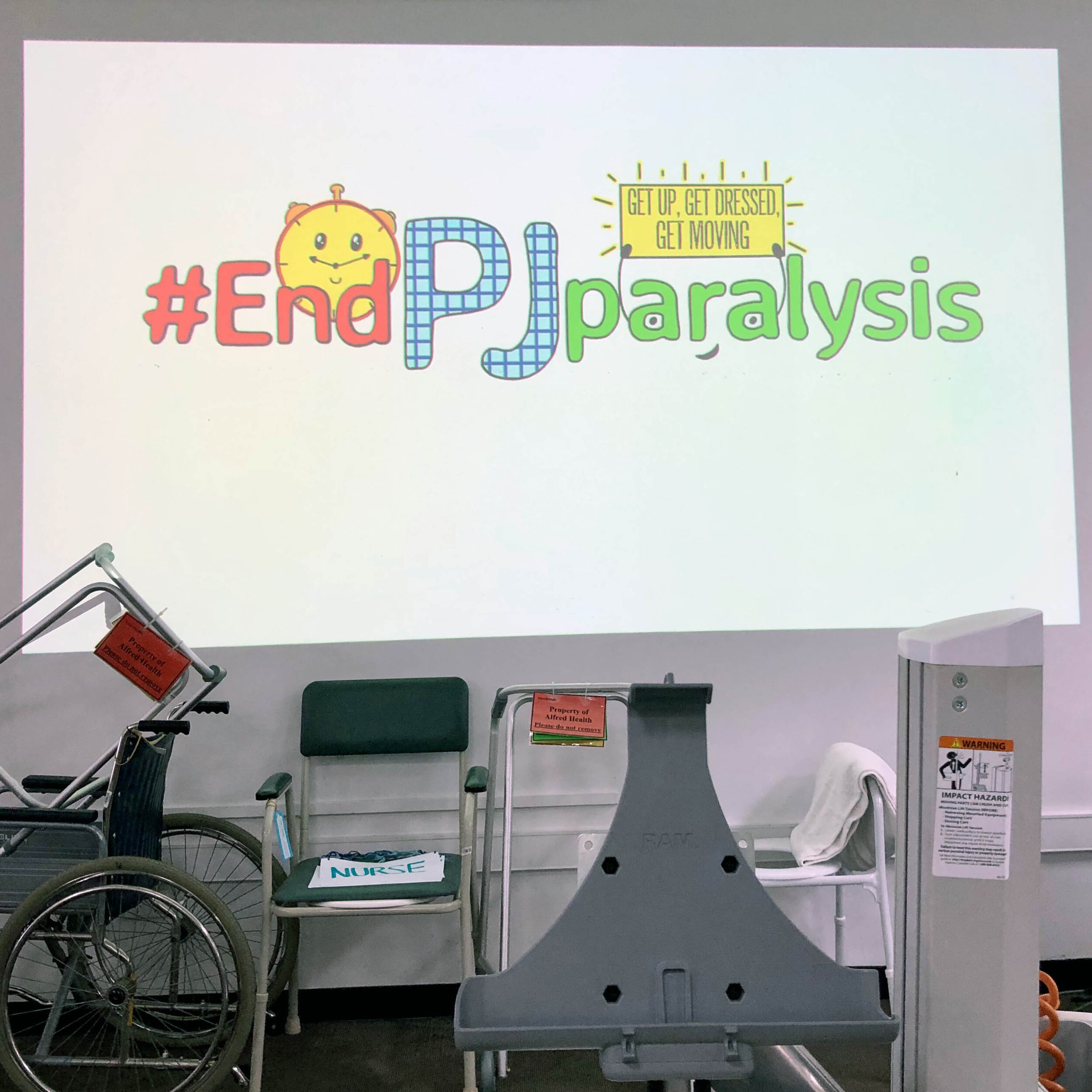
Get Dressed, Get Moving, Get Better - #EndPJParalysis

Did you know that many older adult patients in rehabilitation hospitals accumulate as few as 400 steps per day? Being so physically inactive impairs their rehabilitation and has detrimental effects on their transition home and future recovery.

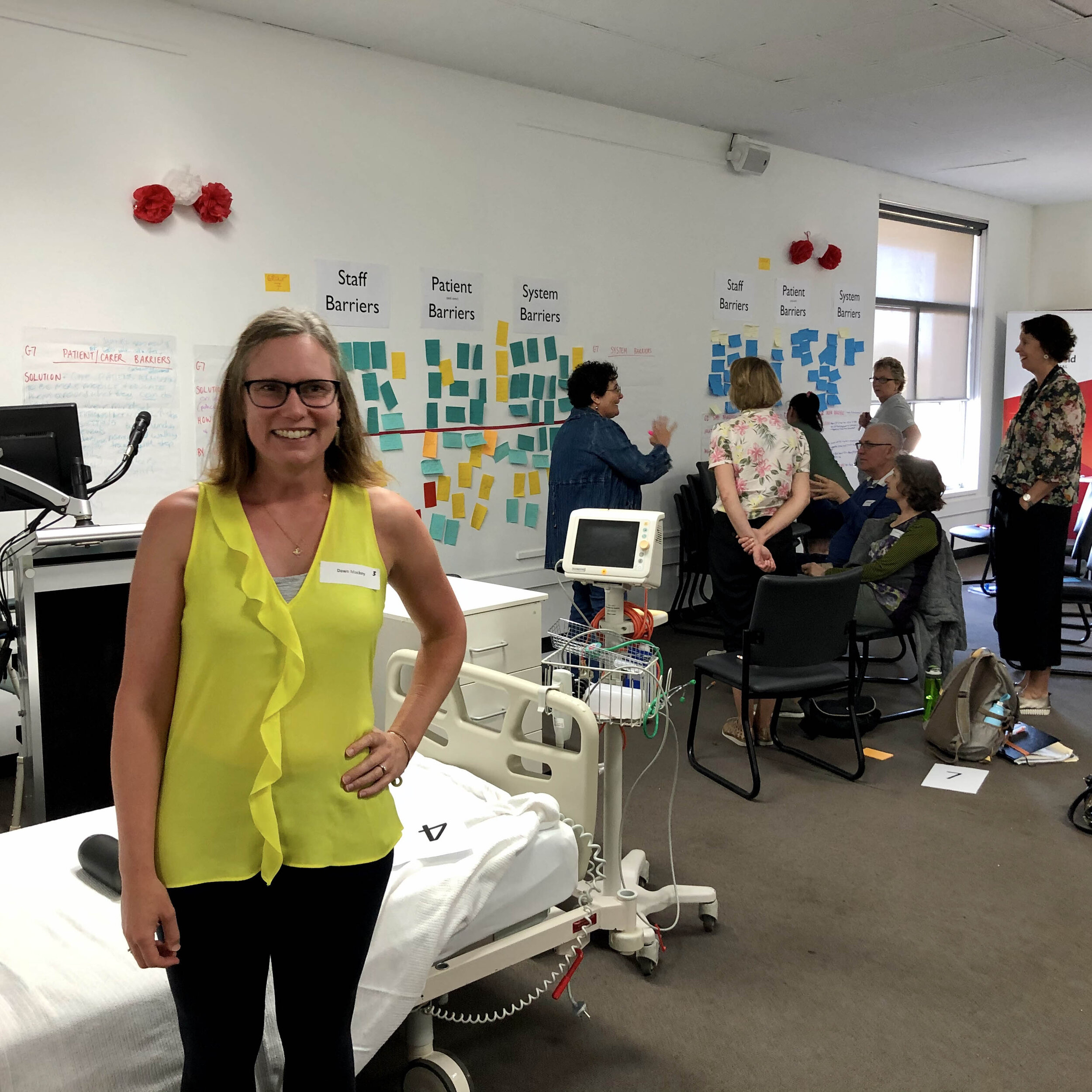
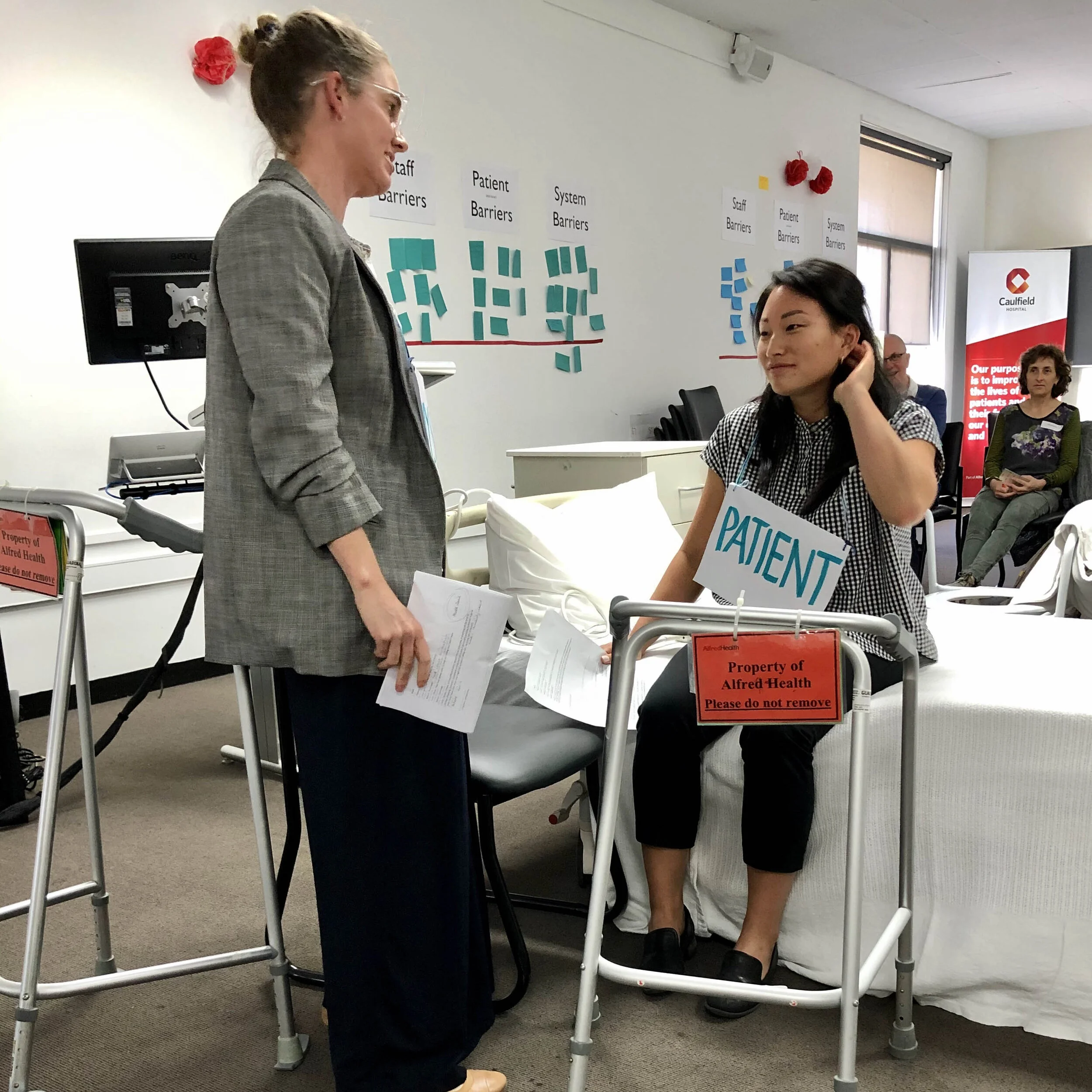
What are the barriers to greater in-hospital mobility? That was the purpose of an interactive #EndPJParalysis workshop I attended in February at Caulfield Hospital, spearheaded by geriatrician Dr. Amelia Crabtree. Amelia brought numerous stakeholders together to tackle this problem, including front-line nursing staff, nurse managers, researchers, executive staff and patients. Through role plays, we identified common barriers to mobility on multiple levels (staff, patients, carers, and system) and problem-solved possible solutions.

A core barrier that emerged during the workshop was the tension between patient mobility and hospital fall prevention policies, which is an issue that has been written about by Growdon et al.

Kudos to Amelia on hosting a terrific workshop on such an important topic. I had a lot of fun attending and learned so much!

Happy to be visiting Australia

Monash SPHPM_edit.jpg

Dawn is pleased to be a visiting professor at Monash University in Melbourne from February to June 2020.

She is affiliated with the School of Public Health and Preventive Medicine in the
Pre-hospital, Emergency and Trauma Research Unit, headed by Dr. Belinda Gabbe.

She is also affiliated with the School of Primary and Allied Health Care and their new Rehabilitation, Ageing and Independent Living (RAIL) Research Centre, directed by Dr. Keith Hill.

During her time in Melbourne, Dawn is working primarily with Senior Research Fellow Dr. Christina Ekegren on studies about older adult trauma and injury, fall prevention, and physical activity promotion. She is also exploring the city’s amazing restaurant, coffee, and yoga culture. Namaste : )

Monash RAIL_edit.jpg
Christina and Dawn at RAIL 2_edit.jpg